Dolmabahçe Palace in Istanbul
Facts checked in November 2026 against the operator's published information.
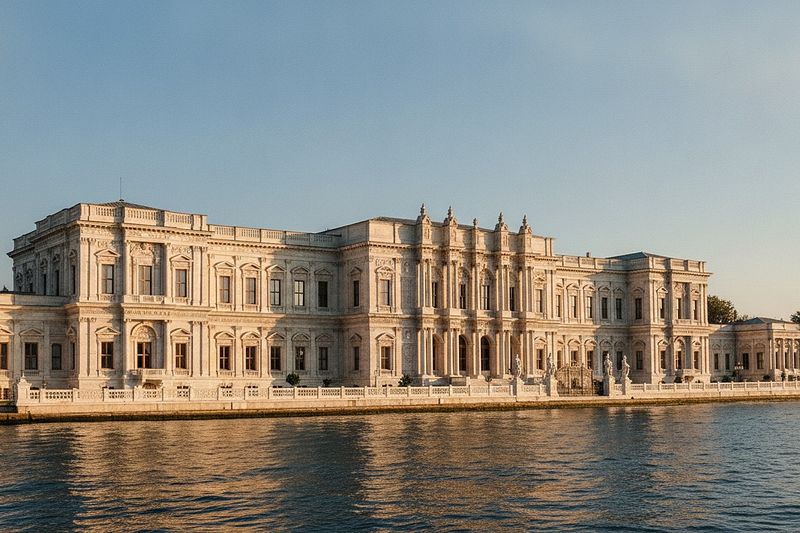
Dolmabahçe Palace is the 19th-century home of the last Ottoman sultans, a white marble palace stretched along the European shore of the Bosphorus in Beşiktaş. One ticket for overseas visitors costs 2,000 Turkish lira, about £30, and covers the state rooms, the Harem and the Painting Museum. The palace is closed on Mondays, the ticket desk shuts at 17:00, and a full visit takes two to three hours.
- Entry (overseas visitors)2,000 TL, about £30
- Under 7sfree
- OpenTue-Sun from 09:00
- ClosedMondays
- Time needed2-3 hours
- Nearest tramT1 Kabataş
Why Dolmabahçe is worth half a day
Most first-time visitors to Istanbul spend their time in Sultanahmet, around Topkapı Palace, Hagia Sophia and the Blue Mosque. Dolmabahçe tells the second half of the Ottoman story. When Sultan Abdülmecid moved the court here from Topkapı in 1856, he wanted a palace that could hold its own against Paris and Vienna. The result mixes Baroque, Rococo and Neoclassical forms with the layout of a traditional Ottoman house: a central hall with rooms opening off its corners.
Inside, almost everything is original. You walk past Hereke silk carpets, Baccarat crystal, Sèvres and Yıldız porcelain and paintings by European artists that were hung for the sultans, not for a museum. Six sultans and the last caliph lived here between 1856 and 1924. After the Republic was founded, Mustafa Kemal Atatürk stayed here on and off from 1927 and died in the palace on 10 November 1938, which is why the building matters so much to Turkish visitors.
Dolmabahçe Palace in numbers
- 285 rooms, 44 halls, 68 toilets and 6 hamams, according to the operator, National Palaces (Milli Saraylar)
- 14,595 m² under one roof: the largest palace in Turkey
- 1843 to 1856: the building works, led by the Balyan family of court architects
- 1984: the year it opened as a museum palace with its original furnishings
- 553 works on show in the Painting Museum in the former Crown Prince apartment
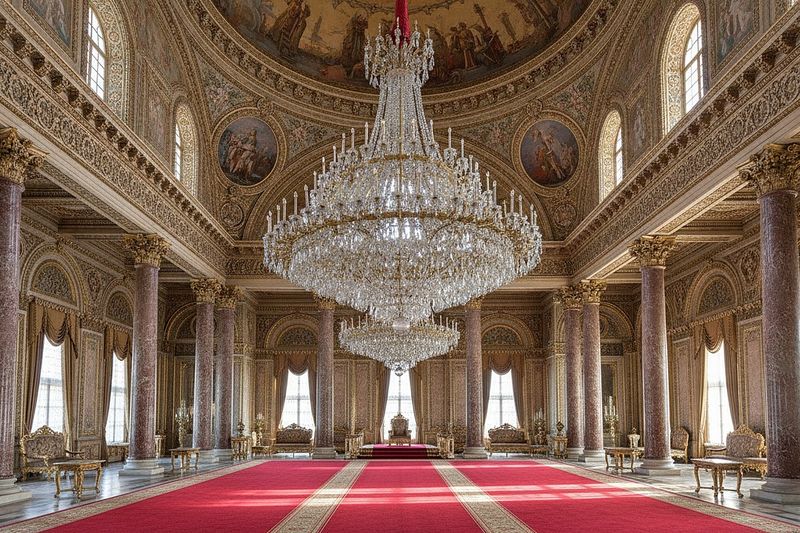
- About 4.5 tonnes: the weight usually given for the chandelier of the Ceremonial Hall
The main building has three parts. The Selamlık (Mabeyn-i Hümâyûn) held the state offices and reception rooms. The Harem (Harem-i Hümâyûn) was the private home of the sultan and his family. Between them sits the Ceremonial Hall (Muayede Salonu), where the sultan received officials on religious holidays. You see all three on one visit, plus the Painting Museum. The route through the palace page explains what is in each part and how long to allow.
Plan your visit
Ticket prices at a glance
National Palaces sets one price for Turkish visitors and a higher one for overseas visitors. These are the overseas prices. Pound figures are rounded and use the European Central Bank rate of 17 November 2026.
| Ticket | Price | In pounds (about) | What it covers |
|---|---|---|---|
| Standard ticket | 2,000 TL | £30 | Selamlık, Harem and Painting Museum |
| Children 0-6 | free | free | all sections |
| Overseas students 7-25 | 300 TL | £4.50 | with a physical ISIC card from age 12 |
| Combined ticket II or III | 2,750 TL | £41 | Dolmabahçe plus palaces on one shore, valid one month |
| Combined ticket I (Full Pass) | 3,500 TL | £53 | Dolmabahçe plus palaces on both shores, no Topkapı |
Source: millisaraylar.gov.tr, read 20 November 2026. Turkish prices change several times a year; check before you go.
Which ticket do you need?
For most visitors the answer is simple: the 2,000 TL standard ticket. It is a single ticket for the Selamlık, the Harem and the Painting Museum, so there is no section to forget. The combined tickets only make sense if you also plan to see other National Palaces sites such as Beylerbeyi Palace on the Asian shore (800 TL on its own). Topkapı Palace is run by the same body but is not part of any Dolmabahçe combined ticket.
One thing to know before you buy a city pass: the Museum Pass Istanbul is not valid at Dolmabahçe, because the palace belongs to a different administration. If Dolmabahçe is high on your list, count its ticket separately. The tickets and prices page has worked examples for couples, families and students, and explains when a reseller ticket is worth paying extra for.
Opening hours in short
The ticket desk opens at 09:00 and closes at 17:00, Tuesday to Sunday. The palace is closed every Monday, on New Year's Day and on the first day of both religious holidays, Ramazan Bayramı and Kurban Bayramı. It stays open on national holidays such as 29 October, Republic Day. If a holiday falls on a Monday, the palace is closed anyway.
Because a proper visit takes two to three hours, the real deadline is earlier than the desk closing time: aim to be in the queue by 14:30 at the latest. Mornings are calmer than the middle of the day, when coach groups arrive. More detail by season and by day of the week is on the opening hours and best time page.
Getting there in short
The easiest route from the old city is the T1 tram to Kabataş, the last stop, followed by a walk of roughly ten minutes north along Dolmabahçe Caddesi. From Taksim, the F1 funicular runs down to Kabataş in a couple of minutes. Ferries from Kadıköy, Üsküdar and Eminönü stop at Beşiktaş, about a quarter of an hour on foot from the gate. A single journey with an Istanbulkart costs about 46 TL, roughly 70p. The getting there page covers each option and the airports.
A visit plan that works
- Arrive at opening time
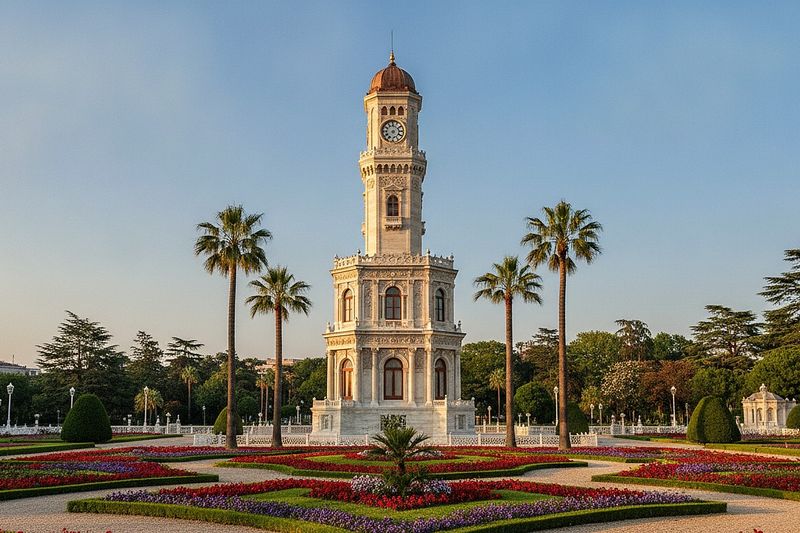
Be at the Clock Tower gate on Dolmabahçe Caddesi around 09:00. You pass a security check first, then the ticket desk, unless you already hold an e-ticket.
- Start with the Selamlık
The state rooms come first: the Crystal Staircase, the reception halls and finally the Ceremonial Hall with its chandelier. Allow about an hour.
- Continue to the Harem
The family quarters are quieter and more intimate. Here you see the room where Atatürk died, with its clocks stopped at 09:05. Allow 45 minutes to an hour.
- Finish in the Painting Museum
The former Crown Prince apartment holds late Ottoman and Orientalist paintings, including a room for Ivan Aivazovsky. Half an hour is enough for most people.
- Walk the shore or the gardens
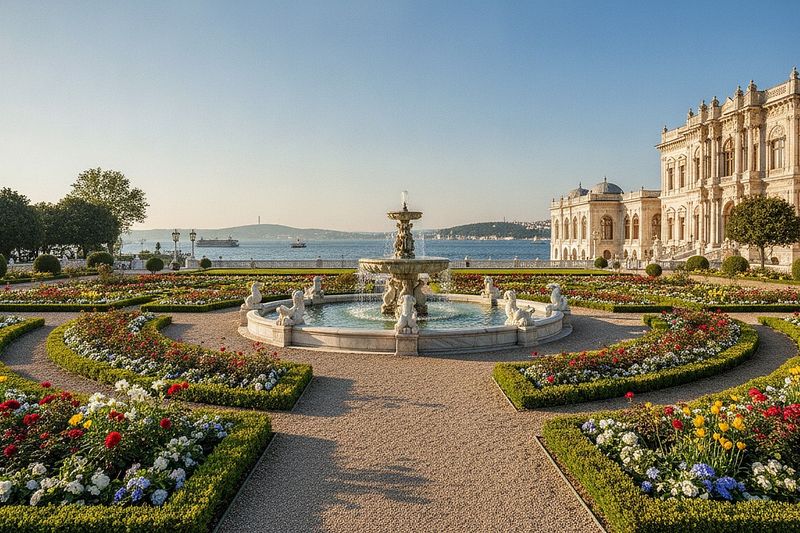
Leave time for the gardens and the Bosphorus gates. Afterwards, walk on to Beşiktaş for lunch or take the ferry across to the Asian side.
Who will enjoy it most
History lovers get a rare thing: a royal palace that still looks the way it did when it was in use, from the dining rooms to the bathrooms. Architecture fans come for the facade, which runs along the water for about 600 m, and for the Crystal Staircase. Families do well too, as children under seven go free and the route is a straightforward loop, though small children may tire of two hours of rooms where nothing may be touched.
If you only have one day in Istanbul, Topkapı and Hagia Sophia come first for most people. With three or more days, Dolmabahçe is the natural second palace, and it is a good choice on a day when Topkapı is closed: Topkapı shuts on Tuesdays, Dolmabahçe on Mondays.
Tips that save time and money
- Do not go on a Monday. It is the most common wasted trip; the gates stay shut all day.
- Do not buy the Museum Pass Istanbul for this palace. It is not accepted here.
- Bring a payment card. Many Istanbul museum desks no longer take cash, and the rate on a card is usually better than at a kiosk.
- Students should carry the physical ISIC card. A phone screenshot may not be accepted, and the difference is 1,700 TL, about £25.
- Check the Bayram dates. The first day of each religious holiday moves every year, about 11 days earlier than the year before.
- Combine it with the Bosphorus. The palace sits on the shore, so a Bosphorus cruise from Kabataş or Beşiktaş fits neatly into the same day.
Photography rules have changed recently. According to recent visitor reports, phone photos without flash are now allowed in the interiors, while tripods and photo shoots are not. Staff may still stop you in some rooms, so follow what the guards say. More rules, accessibility and nearby sights are on the practical tips page.
Before the palace: a garden on the water
The name gives the story away. Dolmabahçe means filled-in garden: the bay here was a natural harbour where the Ottoman fleet anchored, and from the 17th century it was gradually filled in to make a royal garden. Wooden pavilions stood on the site, known together as the Beşiktaş waterfront palace, until Abdülmecid had them pulled down to build in stone. After 1924 the palace served the new Republic, and it was used as an office of the President until 1949. Knowing this helps you read the building: it was a working seat of government until the very end of the empire, not a museum piece.
Entry rules for UK visitors
British citizens with a full British passport can visit Turkey for tourism without a visa for up to 90 days in any 180-day period. According to the UK government's travel advice, your passport must be valid for at least 150 days after the date you arrive and have at least one blank page. There is no e-visa to buy for this kind of trip, so be wary of websites charging for one.
Money: lira, pounds and cards
Prices at the palace are in Turkish lira and change several times a year, so treat any pound figure as an estimate. At the rate of 17 November 2026, one pound was worth about 66.5 lira. If your card offers a choice at the till, pay in lira: converting into pounds at the terminal usually costs more. A visit for two adults costs 4,000 TL, about £60, before coffee in the palace café.
Frequently asked questions
How much is a ticket to Dolmabahçe Palace?
Overseas visitors pay 2,000 TL, about £30, for one ticket that covers the Selamlık, the Harem and the Painting Museum. Children under seven go free and overseas students pay 300 TL with a valid student card.
Is Dolmabahçe Palace open on Mondays?
No. The palace is closed every Monday, on New Year's Day and on the first day of Ramazan Bayramı and Kurban Bayramı. It is open Tuesday to Sunday, with the ticket desk open from 09:00 to 17:00.
How long does a visit take?
Plan two to three hours for the Selamlık and the Harem, plus about half an hour for the Painting Museum. Add time for the security check and, in summer, for the queue at the desk.
Is the Museum Pass Istanbul valid at Dolmabahçe?
No. Dolmabahçe belongs to the National Palaces administration, and the Museum Pass Istanbul is not accepted there. You need a separate ticket.
Can I buy tickets online?
Yes. National Palaces sells e-tickets on its website and in its mobile app, and resellers such as GetYourGuide and Tiqets sell dated tickets and guided tours in pounds. An e-ticket skips the desk queue, not the security check.
Can I take photos inside?
Recent visitor reports say phone photos without flash have been allowed in the interiors since early 2026, but tripods and photo shoots are not. Rules can change, so follow the guards' instructions.
How do I get to Dolmabahçe from Sultanahmet?
Take the T1 tram to Kabataş, the last stop, and walk about ten minutes north along the shore road to the Clock Tower gate. A ride costs about 46 TL with an Istanbulkart.
Which is better, Topkapı or Dolmabahçe?
They show different centuries. Topkapı is the older palace of pavilions and courtyards; Dolmabahçe is a single European-style building with its original furniture. With time for both, see Topkapı first and Dolmabahçe on another day.
Do I need a visa for Turkey from the UK?
No, not for tourist stays of up to 90 days in any 180 days with a full British passport. The passport must be valid for at least 150 days after arrival.
Is the palace suitable for children?
Yes, with some planning. Under-sevens go free and the route is a single loop, but nothing may be touched and the visit is long. Go early, and leave the Painting Museum out if they are flagging.