What to see inside the palace
Facts checked in November 2026 against the operator's published information.
A visit to Dolmabahçe Palace follows one loop: the Selamlık with its state rooms and the Ceremonial Hall, then the Harem, then the Painting Museum in the former Crown Prince apartment. The highlights are the Crystal Staircase, the chandelier of the Ceremonial Hall and the room where Atatürk died. Allow two to three hours.
- Selamlıkabout 1 hour
- Harem45-60 min
- Painting Museumabout 30 min
- Works on show553 paintings
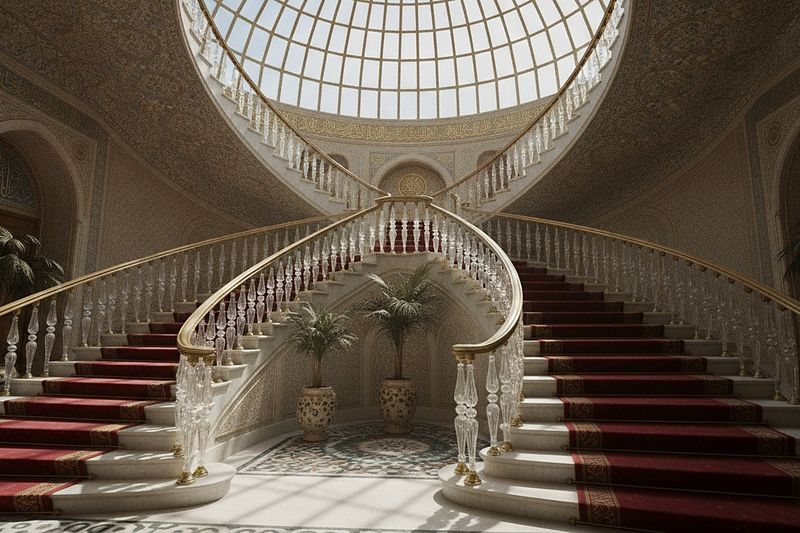
The Selamlık: state rooms
The Selamlık, officially Mabeyn-i Hümâyûn, was where the sultan worked and received guests. You enter through a hall of marble and gilded ceilings and soon reach the Crystal Staircase, a double horseshoe stair with balusters of Baccarat crystal and a brass handrail. It is the palace's most photographed spot. Upstairs come the reception rooms, decorated with Hereke carpets, porcelain from Sèvres and from the Yıldız factory and gifts sent by foreign rulers.
The tour of the Selamlık ends in the Ceremonial Hall (Muayede Salonu), the largest room in the palace, where the sultan received officials during religious holidays. Its chandelier is usually described as weighing about 4.5 tonnes with 750 lamps. A popular story says Queen Victoria gave it to the sultan; according to research cited by recent guides, the court actually bought it. Either way, look up: the dome above is painted to look three-dimensional.
The Harem: the family's home
The Harem, Harem-i Hümâyûn, was the private home of the sultan, his mother, his wives and children. The rooms are smaller, warmer and more personal: sitting rooms with views of the Bosphorus, bathrooms, the sultan's bedroom. Here you also see the simple room where Mustafa Kemal Atatürk died on 10 November 1938 at 09:05. The clocks of the palace are kept stopped at that time in his memory, and Turkish visitors often fall silent here. Be respectful.
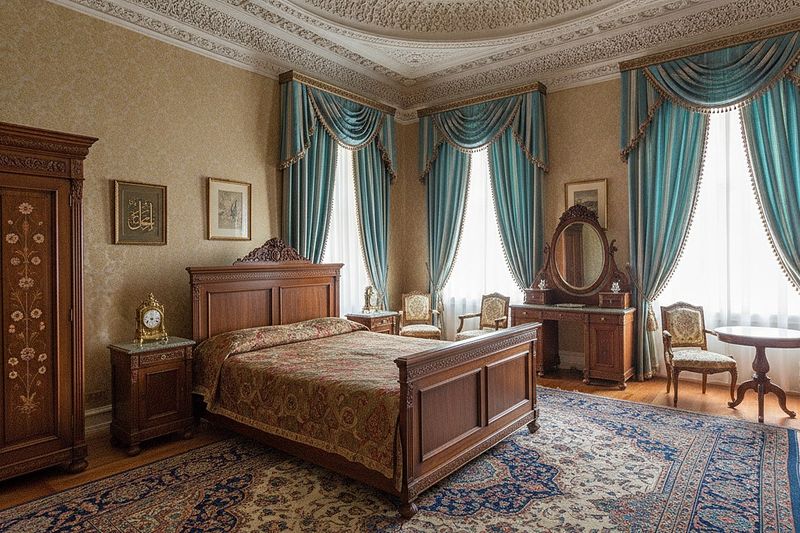
The Painting Museum
The Painting Museum opened in 2014 in the Crown Prince apartment (Veliahd Dairesi), next to the main building. It holds 553 works from the 16th to the 20th century in 34 themed rooms, from portraits of sultans to Bosphorus views. Look for the room dedicated to Ivan Aivazovsky, the Russian seascape painter who worked for the Ottoman court, and for Félix-Auguste Clément's gazelle hunt, the largest Orientalist painting in Turkey. It is included in the standard ticket.
Outside: Clock Tower and gardens
The Clock Tower next to the visitor gate was added under Sultan Abdülhamid II. The gardens between the palace and the Bosphorus, with fountains and flower beds, are part of the visit. The sea gates on the waterfront facade were once the formal arrival point by boat. The Clock Museum is closed for restoration at the time of our check.
Guided tour or on your own?
On your own with the operator ticket is the cheapest option and works well if you have read up beforehand. The route is signposted and you set your own pace. The downside: information panels are short, and without context many rooms look alike.
A guided tour from a reseller costs more than the 2,000 TL door price, but you get explanations in English, someone who handles tickets and the timing, and often a combination with a Bosphorus cruise or other sights. For a first visit with limited time, or for anyone curious about the late Ottoman period and the early Republic, it is money well spent.
Our honest verdict
Dolmabahçe is less ancient than Topkapı, and some visitors find the endless gilding too much. Its strength is the sense that the sultans have just left the room. If you are interested in how the Ottoman Empire tried to become European in its final century, there is no better place in Istanbul.
Frequently asked questions
What are the highlights of Dolmabahçe Palace?
The Crystal Staircase, the Ceremonial Hall with its chandelier, the Harem rooms with views of the Bosphorus, Atatürk's room and the Painting Museum.
How big is the chandelier?
It is usually described as weighing about 4.5 tonnes with 750 lamps. The operator's page does not give a figure, so treat these numbers as approximate.
Is the Painting Museum included?
Yes. The standard 2,000 TL ticket covers the Selamlık, the Harem and the Painting Museum.
Do I need a guide?
No, the route is easy to follow alone. A guide adds context and stories, and some tours combine the palace with a Bosphorus cruise.
Why are the clocks stopped at 09:05?
Atatürk died in the palace on 10 November 1938 at 09:05. The clocks are kept at that time in his memory.